


How to Choose the Right Beauty Chair for Your Salon
Selecting a beauty chair depends on your services, available space, and working positions. Learn the essential points to consider without confusing adjustment features with suitability for your activity.
Start from the actually offered services
The right chair is the one that allows you to seat clients and perform your actions in the positions intended by the manufacturer. Before comparing models, list your current services: facial care, hair removal, eyelash work, or other uses stated in the equipment sheet. A device presented for one use does not automatically suit all others.
Also specify your organization. Do you mainly work sitting, standing, from the side, or at the head of the chair? Do you often need to change position during a session? These questions provide more information than a comparison based solely on a photo or color.
Check the footprint in the working position
Dimensions of the closed chair are not enough. Look for its space requirements in the positions you'll use, especially when the backrest or leg rest is extended. Allow extra space for moving around, placing a stool, and bringing close a trolley without blocking passage.
- Note the width and length of the room and the door location.
- Compare the announced height range with your working method.
- Verify the size of access points, corridors, and any elevator.
- Check weight, packaging, and available assembly instructions.
If a measurement is missing, ask before ordering. Do not infer it from a photograph. A door wide enough for the assembled chair does not guarantee its packaging will pass.
Compare useful adjustments
Height, backrest, leg rest, armrests, and headrest may have different adjustments depending on the model. Check their descriptions individually. The term "electric" does not mean all movements are powered; the number of motors does not alone specify the functions they control.
Manual adjustment may be suitable for occasionally changed positions. Motorized control can be interesting when changes are frequent, subject to ergonomics and usage conditions. Verify the type of control provided, its position, and power needs stated in the manual. Do not add an electrical accessory whose compatibility is unconfirmed.
Examine covering and maintenance
Cover choice should consider the manufacturer's maintenance instructions and the products used in your facility. A surface that looks smooth in an image does not allow all disinfectants. Check the cleaning method, restrictions, and drying conditions provided for the model.
Also compare cushion shapes, access to cleaning areas, and announced availability of accessories. A cover or protection should be chosen according to dimensions and applicable recommendations, not just its commercial title.
Prepare installation and receipt
Before purchase, gather the exact reference, dimensions, announced load capacity, adjustments, included accessories, and installation constraints. Check delivery terms offered for your basket and address. For bulky equipment, specify floors, stairs, or access restrictions to confirm the necessary arrangement.
Upon receipt, follow the provided control and assembly instructions. Keep the manual and equipment reference for maintenance and parts requests. Any doubt about installation or power supply must be clarified before commissioning.
Frequently Asked Questions
Is a chair with more motors necessarily better? No. You must check which movements they control and if these settings match your services. A seldom-used function does not replace suitable height or access.
Can choice be based only on cabin width? No. Movement space, door opening, chair deployment, and complementary equipment space also matter.
Can the chair be used for a service other than described? Do not assume so. Confirm the intended use and consult the model's manual before integrating it into your activity.
What information should be sent to get advice? Indicate planned services, space dimensions, access constraints, and references you wish to compare.
Explore the equipment
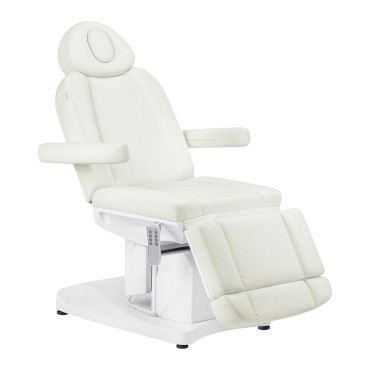 Electric cosmetic chair Azzurro 708a 4 motors whiteView product
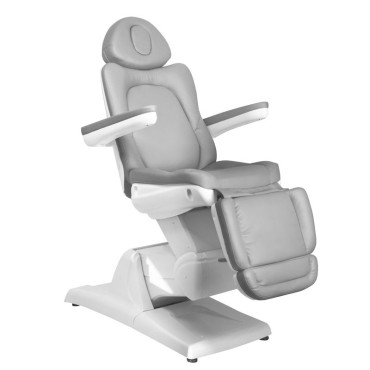 Electric cosmetic chair Azzurro 870 3 motors GrayView product
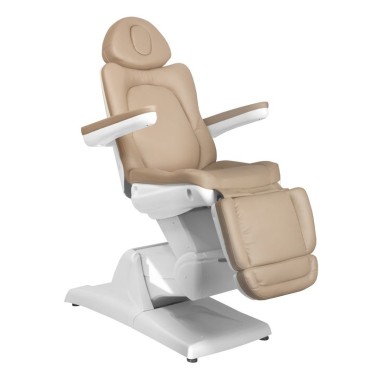 Electric cosmetic chair Azzurro 870 3 motors cappuccinoView product
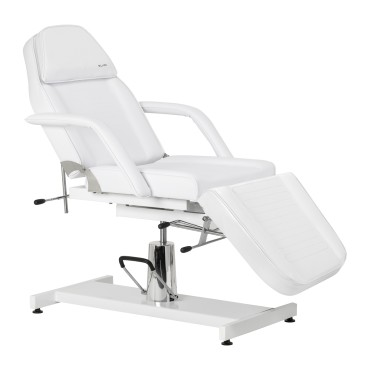 Hydraulic cosmetic chair Sillon 210 with cradle whiteView product
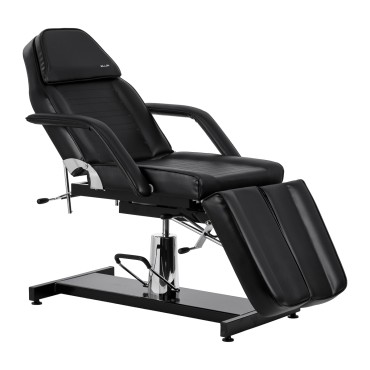 Hydraulic pedicure beauty chair Sillon 210 with rocking function and split footrest blackView product
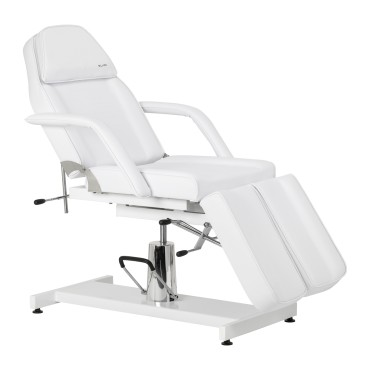 Hydraulic pedicure beauty chair Sillon 210 with rocking function and split footrest whiteView product
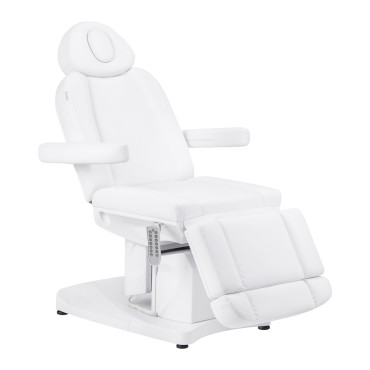 Electric cosmetic chair Azzurro 708A 4 motors with heating super whiteView product
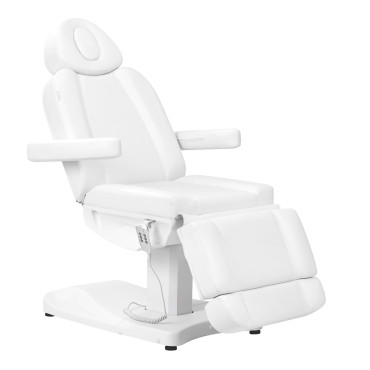 Electric cosmetic chair Azzurro 803D 3 motors whiteView product